
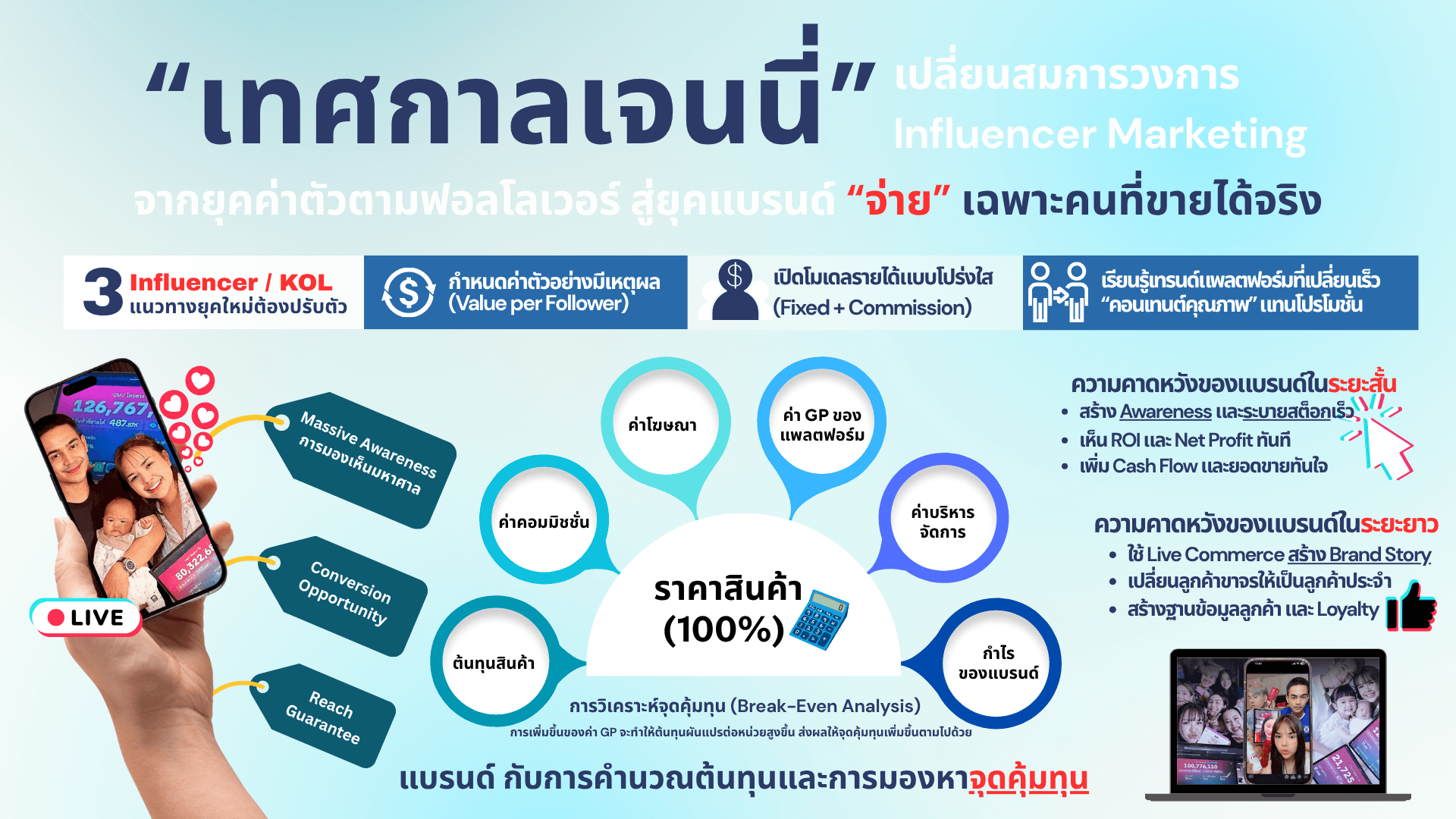
The phenomenon of “Jenny – Daimod Thasodchuen” and her record-breaking live commerce sessions — generating sales in the hundreds of millions of baht — has become a masterclass that redefined Thailand’s Live Commerce and KOL landscape.It’s not just about sales; it’s about setting a new benchmark for how influencer performance and pricing are evaluated.
How Influencers Must Adapt in the Era Where “Sales Define Value”
Traditionally, Influencers and KOLs have been valued based on their Tier, follower count, or Average View Rate (AVR). But Jenny’s model raised a new question: What is the true value of an influencer’s fee?
Here are key points for Influencers and KOLs to adapt to:
1. Reasonable Value per Follower When comparing cost vs. actual sales performance, Jenny’s fee appears lower than many peers in the same tier—yet she delivers measurable results.
This signals a shift: Influencers must prove value through tangible sales outcomes, not just engagement. Future collaboration models may increasingly emphasize shared risk and reward between brands and influencers.
2. Diversified and Transparent Income Models Jenny earns through two channels — a fixed rate and sales commissions from shopping cart conversions. This dual-revenue model boosts her motivation to sell. By featuring a wide range of SKUs within a single live session, she creates a virtual “department store experience,” increasing cross-purchase opportunities and overall commission potential.
Standardized commission structures are also emerging — for instance, higher-priced products often have lower commission percentages, while lower-priced items offer higher commissions to stimulate volume sales.
3. Adapting to Platform Shifts As more creators replicate Jenny’s model, competition will intensify.Platforms may gradually reduce special support or subsidies for smaller sellers, forcing brands to shoulder more promotional costs. Consequently, brands may cut influencer commissions, pushing KOLs to demonstrate stronger ROI.
How Brands Are Recalibrating Costs and Seeking Clear Break-Even Points
Inspired by Jenny’s success, brands are beginning to systematically evaluate influencer ROI. They will expect three key deliverables:
1. Massive Awareness (Short-Term Reach) Brands gain instant access to massive audiences, driving viral exposure in a short window.
2. Conversion Opportunities (Sales Impact) The expectation is a high conversion rate relative to traditional advertising costs.
3. Guaranteed Return per Baht Spent (Reach Guarantee) Brands now demand clear visibility into cost per engagement or conversion, and models like Jenny’s enable precise break-even calculations.
The New Formula for Profitability
Future models will adopt more sophisticated break-even and pricing calculations, considering all key cost components:
Product Price (100%) = Product Cost + Commission + Ad Cost + Platform GP + Brand Profit + Management Fee
This equation helps brands define an appropriate pricing tier and accurately determine their Break-Even Point (BEP) based on real-world examples.
Case Study Example: Selling a 6-bottle beverage pack at 100 THB (Illustrative figures only)
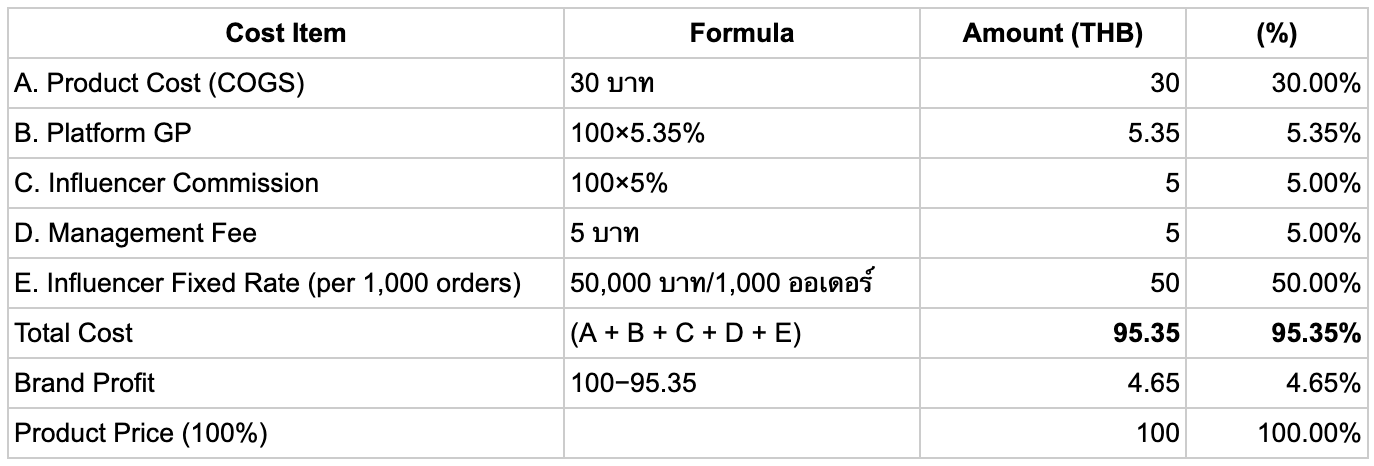
Break-Even Analysis
An increase in the platform GP slightly raises the variable cost per unit, which in turn increases the break-even point.

Break-Even Point (Orders) = 50,000 THB / 54.65 THB per pack ≈ 915 orders
This is the minimum number of orders the brand must achieve, serving as a benchmark to ensure that the investment in influencers delivers a worthwhile return.
IdeasLabs’ Perspective on the Next Chapter of Live Commerce
As the first publisher page in Thailand to introduce the Reach Guarantee Model, IdeasLabs views modern Live Commerce as a strategic instrument that must deliver both short-term impact and long-term brand growth.
short-Term Goals: Tactical Wins
Immediate Impact through Influencer Power Successful Live Commerce must achieve massive reach overnight, reducing brand risk from fixed-rate payments.
Stock and Cash Flow Management Explosive live sales help brands clear inventory and generate instant cash inflow, crucial for sustainable operations.
Clear Profit Margins Brands must see net profit after all costs, including product, influencer, and platform fees. Accurate ROI modeling ensures transparency and confidence in campaign investment.
Long-Term Goals: Strategic Foundations
Building Strong Storytelling Sales may be the goal, but brand storytelling and emotional engagement build long-term loyalty. Live Commerce should reflect the brand’s essence, not just push products.
Consistent Campaign Planning Success shouldn’t end with one live session. It must integrate into monthly or quarterly marketing plans, converting one-time buyers into repeat customers.
Solid Product Offering Live Commerce is a transparent stage. Weak or low-quality products will not sustain sales momentum. A strong core product is fundamental to sustainable performance.
Live Commerce is no longer just a sales arena — it’s a strategic battlefield driven by data intelligence and storytelling mastery.
Those who can decode the equation between Awareness (Reach Guarantee), Conversion (Influencer Performance), and Profit (Brand Management) will emerge as the true leaders of this new era of performance marketing.